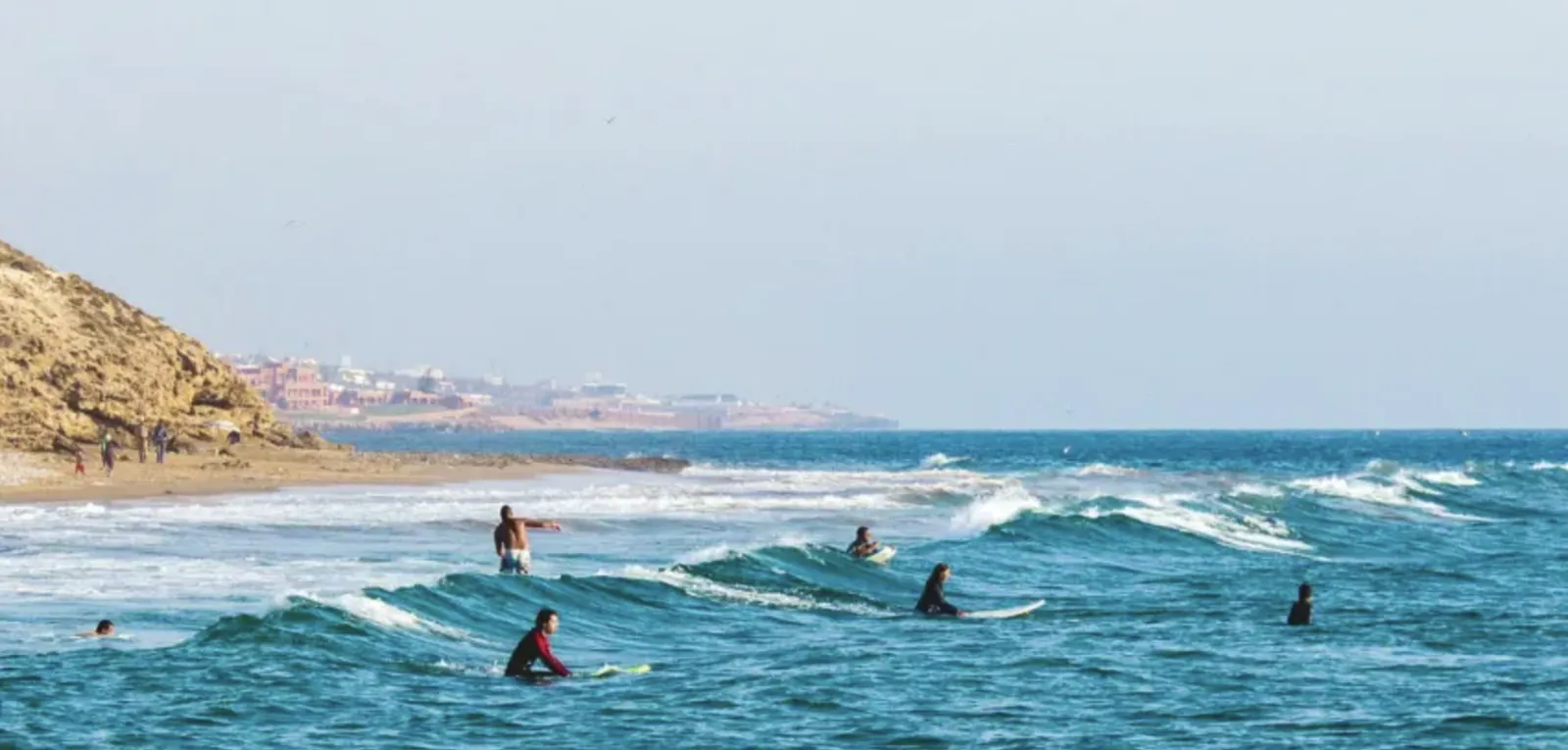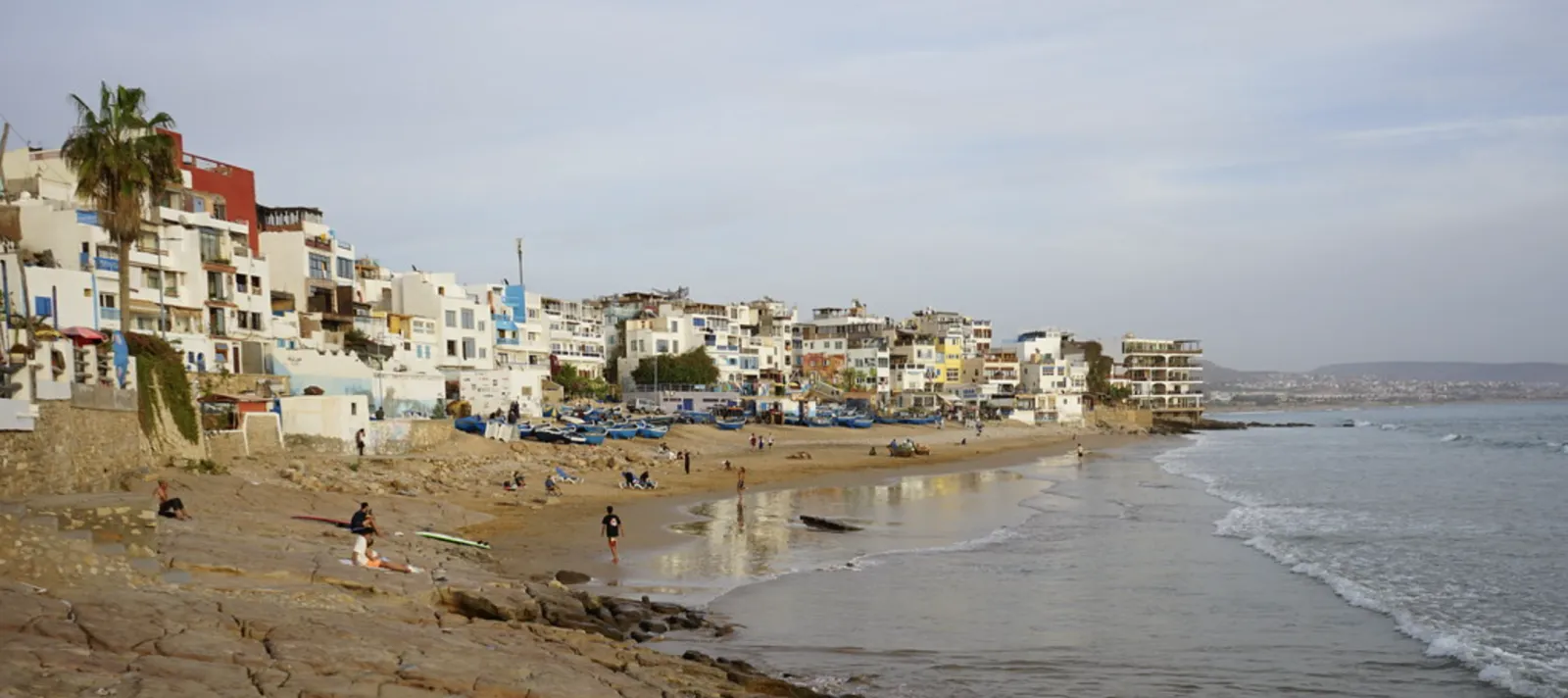
Taghazout is the route I've driven more than any other out of Al Massira, and the appeal lands the moment you clear the city: 48 km of N1 coast road with the Atlantic dead ahead and Anchor Point peeling below you. The catch is the village itself — a knot of one-lane alleys stacked up the cliff, where half the surf camps have no street address that means anything to an outsider.
A driver who's done the run knows whether to drop you on the upper road by the mosque or wind down toward the fishing beach, and that local read is the whole reason this is the flagship transfer here. The drive runs through Aourir and Tamraght first, so if your camp is in one of those quieter villages rather than Taghazout proper, say so at booking — it's five minutes and a fair bit of money short of the cliff.
Arrive with daylight to spare and the descent into the bay, boards rattling on the roof, is the proper start to a surf week.
Compare your options
| Your options | Price from | Best for |
|---|---|---|
| Private transfer Recommended 1 h | €30 · 320 MAD | Arriving with boards and bags to a cliff-side camp |
| Grand taxi 1 h | €35 · 380 MAD | Confident negotiators travelling light |
| Rental car 1 h | €16 · 170 MAD | A surf week chasing swell up and down the coast |
How to get there
A private transfer is the obvious pick at €30 (≈320 MAD), the one I recommend without hesitation because the village logistics make everything else a gamble. Grands taxis run the coast but routinely open at 400–500 MAD for Taghazout and drop you wherever suits them, not you — usually at the top entrance with your bags and a flight of steps to find your camp.
Agree the fare before the doors close, because the meter is a fiction on this rank and the opening quote assumes you don't know the road. No bus does the job: the local line from Agadir serves residents, stops short of the camps, and has nowhere to stow a board bag. Surfers staying a full week sometimes weigh a rental car (from ~€16/day) to chase the swell up to Imsouane or down to Tamri — worth doing the sum, since a week of hire can undercut several point-to-point transfers, though parking in Taghazout is punishing in peak season and most camps run their own shuttle to the breaks.
For a one-way arrival, the fixed transfer wins on every count. Whatever you book, send the camp's exact name and a map pin, never just 'Taghazout'.
Arrival tips
Cars stop at the edges of Taghazout — the upper road by the mosque or the lower car park near the beach — because the inner lanes are too narrow and too steep for a loaded sedan. Tell your camp your arrival window and they'll usually send someone down to meet the car and carry boards and bags the last stretch on foot.
Have the exact camp name written down, ideally with a screenshot of its pin; 'the blue one near the point' will not get you there. If you land after dark the lanes are unlit and disorienting, so a meet-and-carry from the camp matters far more than it does in daylight.
Plan your arrival
- Before you fly, confirm your exact zone with the camp — Taghazout village, the cliff guesthouses, or quieter Tamraght/Aourir — and save its name, pin and phone offline.
- Send the driver or camp your flight number and arrival window, and ask whether they meet the car at the upper road or the lower car park.
- In arrivals, draw 500–800 MAD and switch on an eSIM or grab a SIM — the coast road has patchy signal in spots.
- If you're taking a grand taxi, agree the full fare to your camp's village before you load the bags.
- At the drop point, hand boards and bags to the camp's runner and follow on foot down the lanes — don't try to wheel a case down the cliff steps yourself.
Treating Taghazout as a quick airport hop and budgeting the in-town Agadir fare. It's more than double the distance, an hour each way, and the village handoff eats time on top — pad both the price and your arrival schedule, and don't book an onward dinner reservation for the hour you land.
Ask the driver to pull over at the Anchor Point viewpoint just before the descent into the village — a 90-second stop that gives you the first clean look at the break and a far better photo than anything you'll manage once you're threading the lanes with your bags. Glance at the lineup while you're there; it tells you whether to unpack the board straight away or wait for the tide.
Good to know: Surf-camp lanes are tricky to describe — a pre-booked driver knows the village layout.